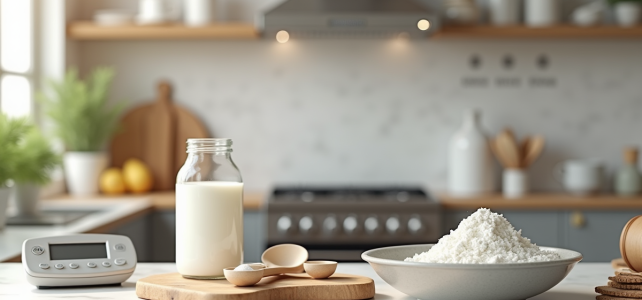
In cooking, the precision of measurements can make all the difference between a successful dish and a complete failure. If you follow international recipes, you have probably faced the challenge of converting milliliters to grams and vice versa. This task can seem complex, especially when you know that the density of ingredients varies significantly.
For example, 100 milliliters of water equals 100 grams, but 100 milliliters of flour weighs only about 55 grams. For baking enthusiasts and aspiring chefs, understanding these conversions is essential for achieving consistent and tasty results.
The Basics of Converting Measurements in Cooking
In cooking, mastering conversions between liquid quantities and solid quantities is essential. Milliliters (ml) and grams (g) are the most commonly used units. Their conversion depends on the density of the ingredients. For example, 300 ml to g for water equals 300 g, while for flour, it represents about 160 g.
Common Conversions
- 1 ml of water = 1 g
- 1 ml of milk = 1.03 g
- 1 ml of oil = 0.91 g
- 1 ml of flour = 0.55 g
Conversions do not stop at liquids. Temperatures also play a fundamental role, especially for recipes requiring precise cooking. A few reference points: 0° Celsius equals 32° Fahrenheit, 100° Celsius equals 212° Fahrenheit.
Foreign Conversions
For fans of international recipes, it is also necessary to convert Anglo-Saxon units:
- 1 kg = 2.20 pounds (lb)
- 1 pound (lb) = 453.5 g
- 1 ounce (oz) = 28.35 g
- 1 cup of flour = 130 g
- 1 cup of sugar = 245 g
Consider the weights of specific ingredients. A medium egg weighs about 50 g, while the egg white weighs 30 g. For vegetables and fruits, weights vary greatly: a medium apple weighs about 150 g, while a medium tomato weighs about 100 g.
For effective and accurate conversions, follow these basic principles. 
Techniques and Tips for Accurate Conversions
For precise conversions, use appropriate measuring utensils. The teaspoon, tablespoon, tea cup, and coffee cup are common instruments. Here are some guidelines:
- 1 teaspoon = 5 ml
- 1 tablespoon = 15 ml
- 1 tea cup = 200 ml
- 1 coffee cup = 100 ml
The weights of ingredients vary according to their nature. For example, a teaspoon of water weighs 5 g, while a teaspoon of flour weighs 4 g. For solid ingredients like powdered sugar or cornstarch, a teaspoon equals 3 g.
Common Utensil Conversion Table
| Utensil | Volume (ml) | Weight (g) |
|---|---|---|
| Teaspoon | 5 ml | 5 g (salt, sugar, oil, butter) |
| Tablespoon | 15 ml | 10 g (cocoa, ground coffee, powdered sugar, cornstarch) |
| Tea Cup | 200 ml | 100 g (flour) |
| Coffee Cup | 100 ml | 100 g (water or milk) |
Some Practical Tips
To avoid common mistakes, weigh your ingredients with a precision scale rather than relying on volumes. Use online converters for quick and accurate conversions between metric and Anglo-Saxon units. Recipes requiring precise cooking will benefit from culinary thermometers to convert temperatures accurately.
Follow these techniques to achieve reliable conversions and improve the accuracy of your culinary recipes.