The labels on your new clothes increasingly feature mentions of composition, origin, or manufacturing conditions. This change is not cosmetic. The fashion trends of this season are reflected as much on the runways as in European regulations that are transforming the textile industry. Autumn colors, rethought cuts, traceable materials: here’s what deserves your attention for autumn-winter 2026.
Digital passport and textile traceability: what’s changing for your purchases
A fundamental issue is changing how brands design their collections, long before questions of colors or silhouettes arise. The European regulation on the eco-design of sustainable products provides for a digital product passport for textiles. This system is intended to gather information on the composition, origin, manufacturing, maintenance, repair, and recycling of each garment.
Textiles are among the priority groups of the European work plan 2025-2030, with a specific act expected in 2027. The pieces you buy this season are therefore already designed within a stricter framework.
Brands are anticipating these obligations by integrating more data into their labels and online product sheets. To keep up with these developments and identify collections that genuinely embrace transparency, Caro Fashion News regularly analyzes fashion news from this perspective.
Ban on destroying unsold items: collections designed differently
Since July 19, 2026, large companies operating in the European Union can no longer destroy their unsold clothing, accessories, and shoes, except for exceptions provided by the regulation. The companies concerned must publish information about the destroyed products and the reasons given.
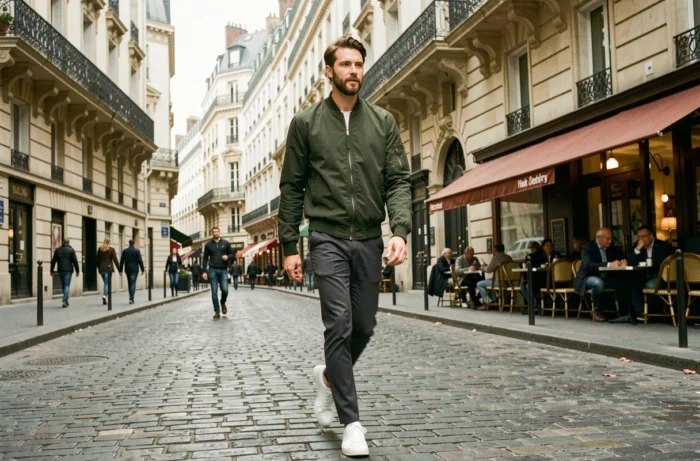
The effects on store offerings are tangible. Brands are reducing the size of their series, favoring pre-orders, and focusing on modular pieces. A reversible jacket, pants that work equally well dressed up or casual: these design choices meet a commercial need (to limit surplus) as well as a style trend.
For you, this translates into more streamlined wardrobes, with multi-use pieces. Modularity, repairability, and resale are becoming design criteria, not just marketing arguments.
Pre-orders and limited editions: the new rhythm
Producing just enough avoids surplus, which is why more and more brands are launching pre-orders even before production begins. In practical terms, this means identifying pieces in advance. Some items simply will not be restocked, so there’s no need to wait for sales on those.
Autumn-winter 2026 colors: brown and ecru dominate the palette
The season’s palette is organized around natural and warm shades. Brown is establishing itself as the elegant alternative to black, ranging from intense chocolate to cappuccino and mocha tones. Long perceived as dull, it gains sophistication through textured materials: twisted knits, soft leathers, corduroy.
Ecru (or off-white) complements this ensemble. Synonymous with discreet luxury, it highlights natural materials and brings a welcome brightness to winter outfits. Paired with brown, it creates a duo that works from the office to the weekend.
What color combinations to favor?
- Chocolate brown and ecru for a soft contrast, suitable for both professional outfits and Saturday outings
- Mocha brown and burgundy for a rich autumn palette that pairs well with leather accessories
- Total ecru look by varying textures (thick knit, linen, brushed cotton) to avoid a uniform effect
Structured jacket and wide pants: the cuts that define the season
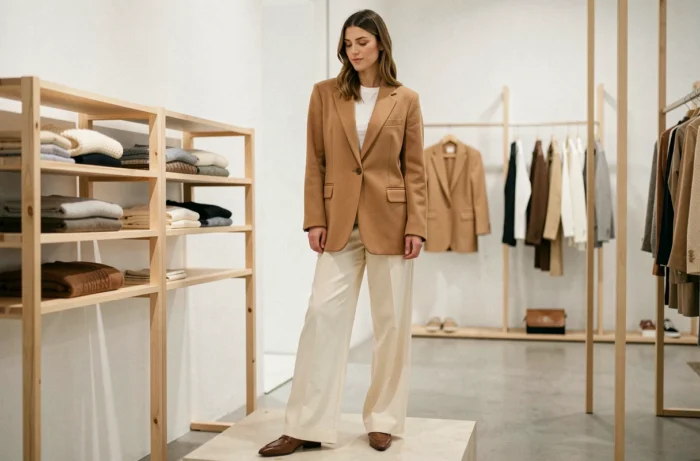
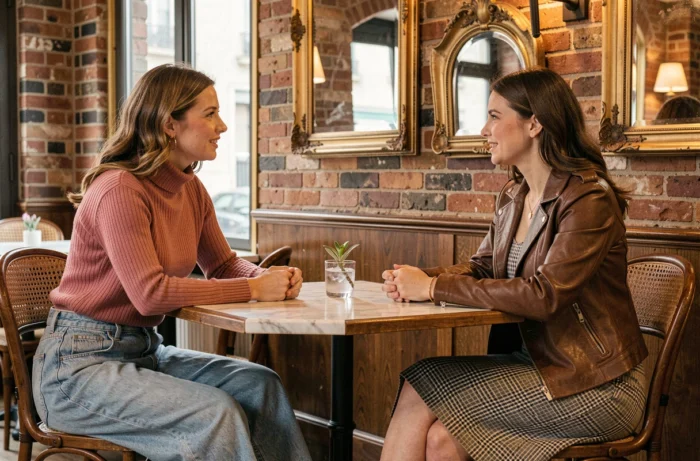
British-inspired tailoring is making a strong comeback. The structured jacket, slightly fitted at the waist, worn over wide pants or a midi skirt, is the hallmark silhouette of this autumn. Checks and fine stripes reinforce this style.
Wide pants remain the dominant cut, in both denim and dress fabric. If you’re hesitating between several clothing investments this season, a well-cut high-waisted wide-leg pant will serve as a foundation for many looks.
How to integrate these cuts into everyday style
The structured jacket can be worn open over a fine turtleneck for a relaxed effect. Closed with a belt, it becomes a dressed-up piece. The wide pants work well with both sneakers and medium-heeled ankle boots.
- The short colored jacket adds dimension to a monochrome brown or ecru outfit
- The barrel jeans (wide and slightly tapered at the bottom) are gaining ground as an alternative to classic straight jeans
- The chunky knit dress works alone or layered under a jacket, a typical modular choice for the season
- Textured layering (shirt under sweater, jacket over dress) allows for adaptation to temperature variations without multiplying purchases
Materials and knits: what the season favors
Refined knits occupy a central place this season. Oversized sweaters, long vests, knitted dresses: knitwear is worn both day and night. Favor materials with clearly indicated compositions, especially if the label mentions a fiber blend. With the rise of traceability, brands that are most transparent on this point gain credibility.
Leather (or faux leather) remains present, particularly in jackets and accessories. Boiled wool, cashmere, and corduroy complete the autumn wardrobe. The common thread of these choices: pieces designed to last several seasons, not to be replaced in the next cycle.
Autumn-winter 2026 fashion is distinguished less by spectacular breaks than by a change in logic. European regulations on the destruction of unsold items and textile traceability are pushing brands towards more thoughtful collections. For consumers, this translates into better-designed pieces, coherent palettes, and a wardrobe that prioritizes durability over constant renewal.