
Drivers are often faced with unexpected signals emitted by their vehicle. These alerts, often unknown or ignored, can nonetheless prevent costly breakdowns and potentially serious accidents. Adequate awareness of the messages sent by the dashboard is therefore essential to ensure the safety and longevity of your car.
A warning light that comes on or a suspicious noise should never be overlooked. Understanding what these signals mean and knowing how to react not only helps avoid inconveniences but also optimizes the functioning of your automobile.
Warning signs of failure: unusual noises, vibrations, and smells
The signals emitted by your car are not limited to warning lights. Unusual noises, vibrations, and smells should also draw your attention. An engine that emits strange noises, squeaking from the brakes, or a whistling from the belt are all indicators of a potential mechanical issue.
- Strange noises: An engine producing rattles or grinding noises could signal a worn timing belt or a faulty tensioner.
- Vibrations: Vibrations felt in the steering wheel or brake pedal often indicate worn brake discs or faulty shock absorbers.
- Unusual smells: A burning smell or rubber odor may reveal a problem with the belt or brakes.
Your vehicle’s dashboard is also a valuable source of information. For Peugeot 206 owners, the list of dashboard lights for the 206 helps understand the various alerts and the actions to take. White smoke coming from the exhaust could indicate a coolant issue, while blue smoke might signal an oil leak at the seals.
Being vigilant about these warning signs can prevent serious failures. Regular inspection of components such as brake pads, shock absorbers, and the exhaust system is essential to keep your vehicle in good condition.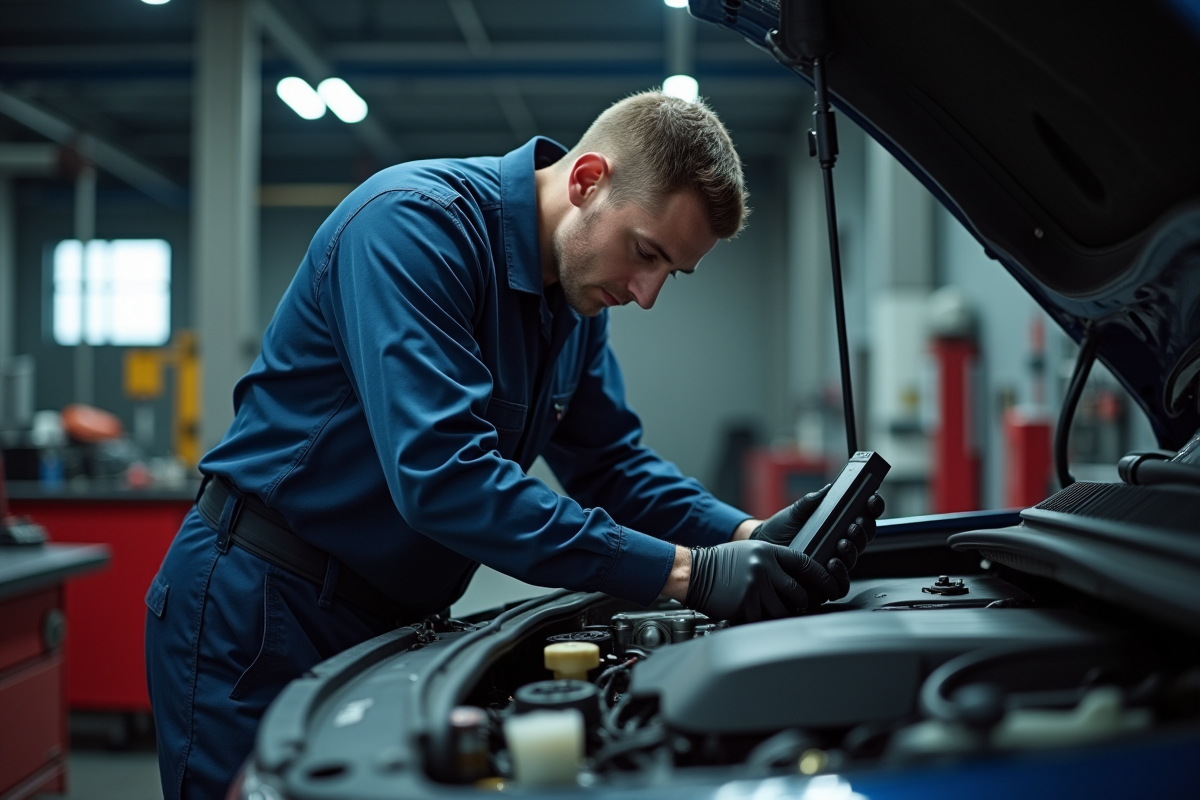
Dashboard lights: understanding and reacting
The dashboard warning lights constitute a coded language specific to each vehicle. They alert you to anomalies, and by deciphering them, you can avoid costly breakdowns.
- Engine light: This light indicates issues related to the engine. Immediate checking is recommended to avoid serious damage.
- Oil light: This signal indicates a low oil level or insufficient oil pressure. Ignoring this light can lead to engine failure.
- Battery light: This light alerts you to battery charging issues. It could be a faulty alternator or a battery nearing the end of its life.
- ABS light: This light signifies a problem with the anti-lock braking system. Driving safety may be compromised.
- Airbag light: This light indicates a potential fault in the airbag system, questioning your protection in the event of an accident.
- Temperature light: This light signals an engine overheating. Stop the vehicle to avoid damaging the engine.
The color of the lights also plays a key role:
- Red: Requires immediate intervention, corresponding to urgent problems.
- Orange: Signals an anomaly or warning, requiring quick verification.
- Green and blue: Provide general information about the vehicle’s operation.
In the face of a red or orange light, consult a professional immediately. Careful reading of the warning lights and a quick response can prevent serious breakdowns and ensure safe driving.